


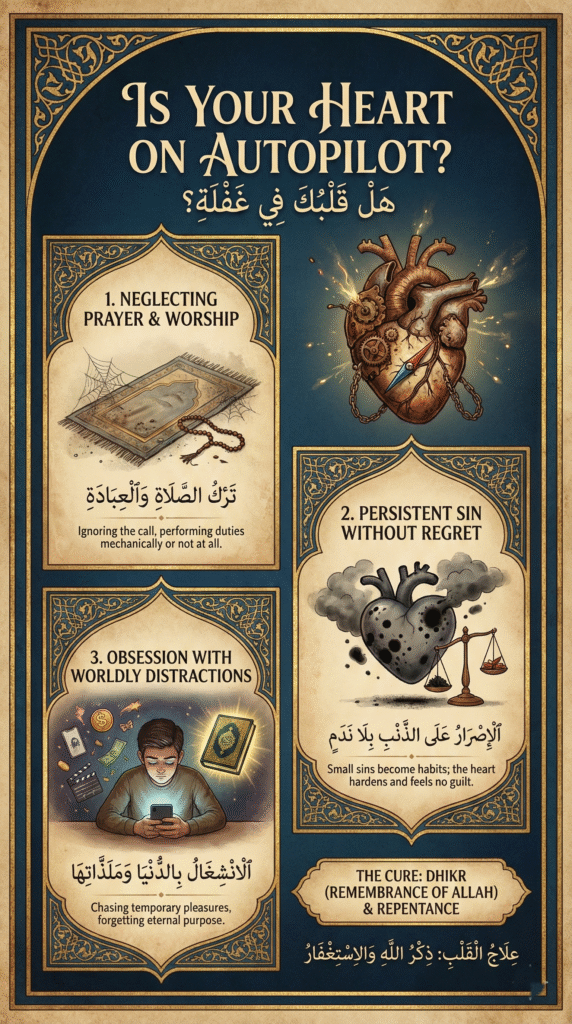
Is Your Heart on Autopilot
We all get busy. Life moves fast—work, family, bills, the endless scroll on our phones. In the noise, something quiet inside us can start to change without us even noticing. Our hearts can go on autopilot.
In Islam, the heart (qalb) isn’t just the muscle in your chest. It’s the center of your faith, your understanding, and your connection to Allah. And just like metal left in the rain, it can develop rust. The Prophet Muhammad (peace be upon him) warned us: “The heart becomes rusty just as iron rusts when water touches it.” He was asked, “What is its polish?” He replied, “Remembrance of Allah and the recitation of the Quran.” (Hadith)
So, how do we know if that rust is starting to form? Here are three clear warning signs to check within yourself.
Sign #1: The Prayer Feels Like a Chore
You pray your five daily prayers… but does it feel different? Do you rush through the words, your mind replaying an argument from work or your weekend plans? Do you find yourself watching the clock, just wanting to “get it done”?
This is the biggest, most common sign of spiritual rust. Prayer (Salah) is meant to be our direct line to Allah, our moment to pause in a spinning world. When it becomes a mechanical checklist item, a box to tick, it means the connection in your heart has grown faint. The act is there, but the essence—the khushu‘ (concentration and humility)—is missing.
Sign #2: Wrongdoing Starts to Feel “Normal”
Think about the last time you saw or heard something clearly against Islam’s teachings—maybe gossip, a harsh comment, a questionable image online. What was your reaction?
A healthy heart feels a pinch, a discomfort. It’s a spiritual immune system kicking in. A heart developing rust, however, feels nothing. You might shrug it off. “It’s just a joke.” “Everyone does it.” “It’s not a big deal.” When your internal alarm for sin stops going off, and what was once clearly wrong starts to feel ordinary, that’s a layer of rust settling in. You’ve muted your own conscience.
Sign #3: The Quran Sounds Like Background Noise
You listen to a beautiful recitation, maybe while cooking or driving. The voice is melodious, but the meaning doesn’t touch you. You read a verse you’ve read a hundred times, but it feels flat, as if you’re reading a textbook.
The Quran is Allah’s direct speech, a healing and guidance for the hearts. When its words no longer move you, make you reflect, or stir any emotion—be it hope, fear, or love—it’s a serious warning. It means a barrier has grown between the message and your heart. The rust is acting as a soundproof wall.
The Good News: The Polish is in Your Hands
Recognizing these signs isn’t a cause for despair. It’s a mercy. It’s Allah gently waking you up from the autopilot mode. The polish, as the Prophet (peace be upon him) told us, is readily available:
- Ditch the Autopilot in Salah: For just one prayer today, slow down. Prepare two minutes before. Understand the meaning of just one ayat you’re reciting. Whisper your personal du’a in Sujood. Break the routine.
- Re-sensitize Your Heart: If you catch yourself in a gossip circle, gently excuse yourself. When you see something wrong, make a simple du’a in your heart: “Astaghfirullah.” Actively seek out good company, even if it’s just online for now.
- Have a 5-Minute Quran Date: Don’t just listen or read. Engage. Pick one small verse. Read its translation. Sit quietly for 60 seconds and think: “What is this saying to me, right now, in my life?” Let it land.
Spiritual rust is a part of the human journey. The goal isn’t to never have it form; the goal is to recognize it and polish it away. Start today. Turn off the autopilot. Take the controls back, and direct your heart back to its Source.
کیا آپ کا دل آٹوپائلٹ پر ہے؟ روحانی زنگ کے 3 خطرے کی گھنٹیاں
ہم سب مصروف ہو جاتے ہیں۔ زندگی تیز ہے—نوکری، خاندان، بلز، فون پر لامتناہی سکرول۔ اس شور میں، ہمارے اندر کچھ پرسکون بدلنا شروع ہو جاتا ہے اور ہمیں احساس تک نہیں ہوتا۔ ہمارے دل آٹوپائلٹ پر چلے جاتے ہیں۔
اسلام میں، دل (قلب) صرف سینے کا پٹھا نہیں ہے۔ یہ آپ کے ایمان، آپ کی سمجھ اور اللہ سے تعلق کا مرکز ہے۔ اور بالکل اسی طرح جیسے بارش میں رکھی دھات پر زنگ لگ جاتا ہے، دل پر بھی لگ سکتا ہے۔ حضور نبی اکرم ﷺ نے ہمیں خبردار کیا تھا: “دل پر زنگ لگتا ہے جیسے پانی لگنے سے لوہے پر زنگ لگ جاتا ہے۔” پوچھا گیا: “اس کی پالش کیا ہے؟” آپ ﷺ نے فرمایا: “اللہ کا ذکر اور قرآن مجید کی تلاوت۔” (حدیث)
تو، ہمیں کیسے پتہ چلے گا کہ یہ زنگ بننا شروع ہو رہا ہے؟ اپنے اندر جانچنے کے لیے یہاں تین واضح علامات ہیں۔
علامت #1: نماز ایک بوجھ لگنے لگے
آپ پانچوں وقت کی نماز پڑھتے ہیں… لیکن کیا یہ محسوس مختلف ہوتا ہے؟ کیا آپ الفاظ جلدی جلدی پڑھتے ہیں، آپ کا دماغ دفتر کی کسی بحث یا ویک اینڈ کی منصوبہ بندی میں گم رہتا ہے؟ کیا آپ خود کو گھڑی دیکھتے پاتے ہیں، بس اسے “نمٹانا” چاہتے ہیں؟
یہ روحانی زنگ کی سب سے بڑی، سب سے عام علامت ہے۔ نماز (صلوۃ) ہمارے لیے اللہ سے براہ راست تعلق کا ذریعہ ہے، اس تیز رفتار دنیا میں رک کر سانس لینے کا لمحہ۔ جب یہ ایک مشینی چیک لسٹ کا کام، ٹک کرنے کا ڈبہ بن جائے، تو اس کا مطلب ہے آپ کے دل میں تعلق کمزور پڑ گیا ہے۔ عمل تو موجود ہے، لیکن اصل چیز—خشوع اور عاجزی—غائب ہے۔
علامت #2: برائی “عام” سی لگنے لگے
آخری بار کا سوچیں جب آپ نے اسلام کی تعلیمات کے خلاف کوئی واضح بات دیکھی یا سنی—چاہے وہ غیبت ہو، کوئی سخت تبصرہ ہو، یا آن لائن کوئی مشکوک تصویر۔ آپ کا رد عمل کیا تھا؟
ایک صحتمند دل میں ایک چبھن، بے چینی محسوس ہوتی ہے۔ یہ روحانی قوت مدافعت کا کام کرنا ہے۔ لیکن جو دل پر زنگ لگ رہا ہو، اسے کچھ محسوس نہیں ہوتا۔ آپ شاید کندھے اچکا دیں۔ “یہ تو بس مذاق تھا۔” “سب کرتے ہیں۔” “اتنی بڑی بات نہیں ہے۔” جب گناہ کے لیے آپ کا اندرونی الارم بجنا بند ہو جائے، اور جو پہلے واضح طور پر غلط تھا وہ عام سا لگنے لگے، تو یہ زنگ کی ایک تہہ جم رہی ہے۔ آپ نے اپنے ضمیر کی آواز ہی دبا دی ہے۔
علامت #3: قرآن پس منظر کا شور لگنے لگے
آپ ایک خوبصورت تلاوت سنتے ہیں، شاید کھانا پکاتے یا گاڑی چلاتے ہوئے۔ آواز سریلی ہے، لیکن معنی آپ کو چھوتے نہیں۔ آپ وہ آیت پڑھتے ہیں جو سو بار پڑھ چکے ہیں، لیکن یہ پھیکی لگتی ہے، جیسے آپ کوئی نصابی کتاب پڑھ رہے ہوں۔
قرآن اللہ کا براہ راست کلام ہے، دلوں کے لیے شفا اور ہدایت ہے۔ جب اس کے الفاظ آپ کو متاثر نہ کریں، آپ کو غور و فکر پر نہ ابھاریں، یا کوئی جذبہ نہ جگائیں—خواہ وہ امید ہو، خوف ہو یا محبت—تو یہ ایک سنگین انتباہ ہے۔ اس کا مطلب ہے کہ پیغام اور آپ کے دل کے درمیان ایک رکاوٹ کھڑی ہو گئی ہے۔ زنگ ایک آواز روک دیوار بن گیا ہے۔
خوشخبری: پالش آپ کے ہاتھ میں ہے
ان علامات کو پہچاننا مایوسی کی بات نہیں ہے۔ یہ رحمت ہے۔ یہ اللہ کا آپ کو آٹوپائلٹ موڈ سے نرمی سے جگانا ہے۔ پالش، جیسا کہ نبی ﷺ نے بتایا، آسانی سے دستیاب ہے:
- نماز میں آٹوپائلٹ بند کریں: آج کی صرف ایک نماز کے لیے، آہستہ چلیں۔ دو منٹ پہلے تیاری کریں۔ جو ایک آیت آپ پڑھ رہے ہیں اس کا مطلب سمجھیں۔ سجدے میں اپنی ذاتی دعا پھُسپھُسائیں۔ روٹین توڑیں۔
- اپنے دل کی حساسیت واپس لائیں: اگر آپ خود کو غیبت کے دائرے میں پائیں، نرمی سے معذرت کر کے وہاں سے اٹھ جائیں۔ جب کوئی برائی دیکھیں، دل میں ایک سادہ سی دعا کریں: “اَستَغفِرُاللّٰہ”۔ اچھی صحبت تلاش کریں، چاہے ابھی کے لیے آن لائن ہی کیوں نہ ہو۔
- قرآن کے ساتھ 5 منٹ کا وقت طے کریں: صرف سنیں یا پڑھیں نہیں۔ مشغول ہوں۔ ایک چھوٹی سی آیت منتخب کریں۔ اس کا ترجمہ پڑھیں۔ چپچاپ 60 سیکنڈ بیٹھیں اور سوچیں: “یہ میرے سے کیا کہہ رہی ہے، ابھی، میری زندگی میں؟” اسے اترنے دیں۔
روحانی زنگ انسانی سفر کا ایک حصہ ہے۔ مقصد یہ نہیں کہ وہ کبھی لگے ہی نہ، مقصد یہ ہے کہ اسے پہچانیں اور صاف کریں۔ آج ہی شروع کریں۔ آٹوپائلٹ بند کریں۔ کنٹرول واپس لیں، اور اپنے دل کو اس کے منبع کی طرف موڑ دیں۔